

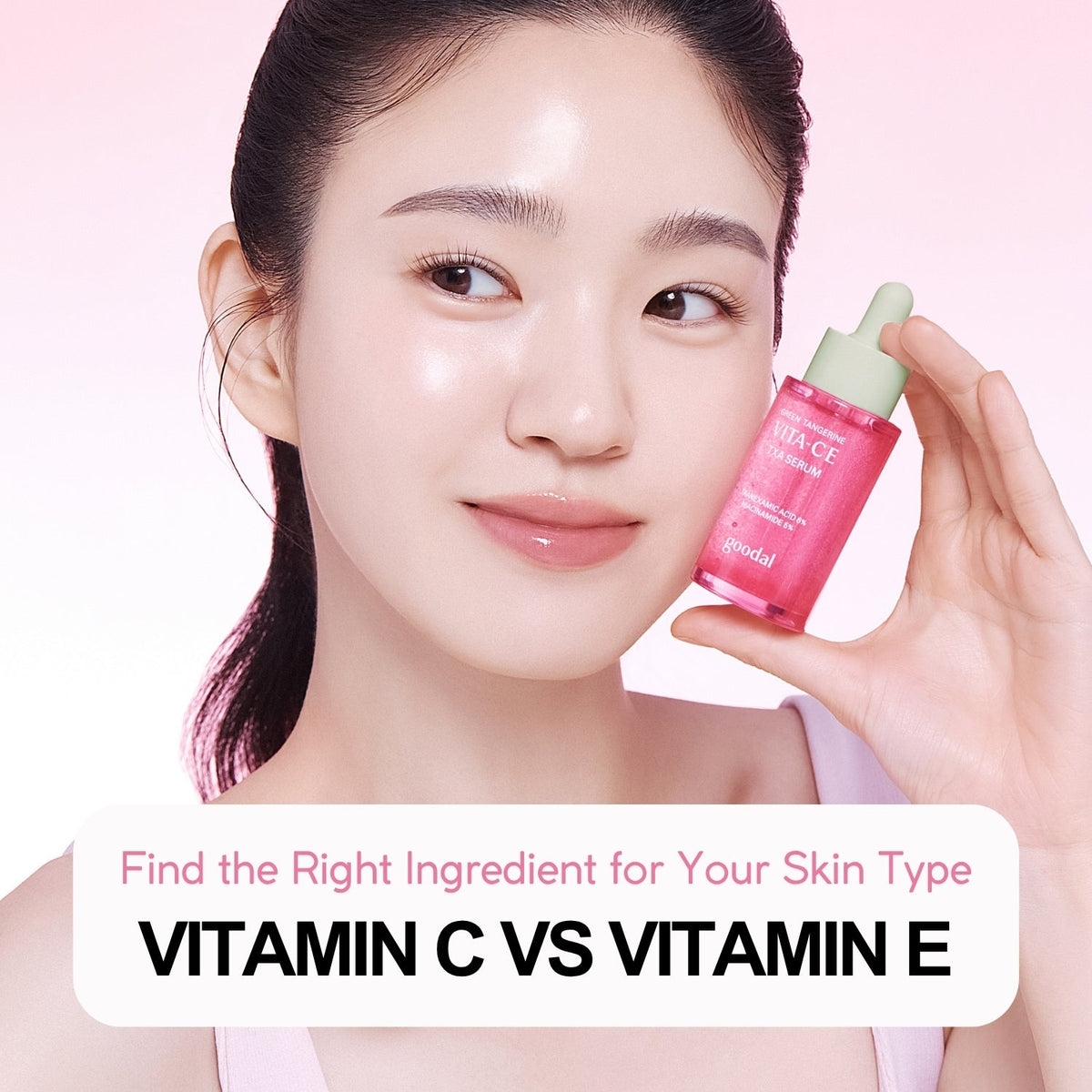
If your skin looks dull, Vitamin C may be the ingredient you are missing. If it feels dry, tight or stressed, Vitamin E may be the better place to start.
Both are popular antioxidants, but they do very different jobs. Vitamin C is best known for its brightening properties. It helps even out skin tone and supports collagen production.
Vitamin E focuses more on nourishment, moisture and protecting the skin barrier. So, which one is better? It really depends on what your skin needs right now.
Vitamin C: Your Daily Glow Booster

Vitamin C is one of the most trusted ingredients for dullness, dark spots and uneven skin tone. Every day, skin is exposed to UV rays, pollution and other environmental stressors that can make it look tired and contribute to early signs of ageing. Vitamin C helps provide antioxidant protection while supporting the skin’s natural collagen production.
With consistent use, it can help:
-
Brighten dull, tired-looking skin
-
Reduce the appearance of dark spots and post-acne marks
-
Improve uneven skin tone
-
Support firmer-looking skin
-
Protect against daily environmental stress
Vitamin C is not an overnight brightening treatment. Think of it as a long-term glow ingredient that gradually helps the skin look clearer, fresher and more even.
It is also commonly paired with Vitamin E in Korean skincare. Vitamin C and E complement each other by supporting a more balanced routine focused on brightness, hydration and antioxidant care.
How to Use Vitamin C
Vitamin C works well in a morning routine:
Cleanser → Toner → Vitamin C serum → Moisturiser → Sunscreen
Apply a few drops after cleansing and toning, then follow with moisturiser. Sunscreen is still essential. Vitamin C can support your skin’s antioxidant defence, but it does not replace SPF.
Can Sensitive Skin Use Vitamin C?
Yes, but it is best to start slowly. Pure Vitamin C, also known as L-ascorbic acid, can feel strong on sensitive skin, especially in high concentrations. If your skin reacts easily, look for a lower concentration or a gentler Vitamin C derivative.
Start by using it two or three times a week, then gradually increase the frequency if your skin feels comfortable. A little tingling may happen with some formulas, but ongoing burning, redness or irritation is a sign to stop. For sensitive skin, the best Vitamin C is not always the strongest one. It is the one your skin can use consistently.
Our Vitamin C Pick
Goodal Green Tangerine Vita C Niacinamide 10 Toning Ampoule
When dullness, uneven tone and visible pores all show up at once, one active may not feel like enough. This fast-absorbing ampoule combines green tangerine extract with 10% niacinamide, tranexamic acid and panthenol.
It helps brighten the complexion, improve the look of pigmentation and refine skin texture while keeping the formula lightweight and comfortable.
SUNGBOON EDITOR Muscat Grape Vita C Brightening Ampoule
Not every Vitamin C serum needs to feel strong to work well. This lightweight ampoule pairs a stable Vitamin C derivative with antioxidant-rich Muscat Grape extract to help improve dark spots, uneven tone and dullness. It absorbs quickly and adds soothing hydration, making it a practical daily option for clearer, fresher-looking skin.
MISSHA Vita C Plus Spot Correcting Concentrate Ampoule
Some dark spots need more focused attention than an everyday glow serum can provide. This concentrated Vitamin C ampoule is made for stubborn pigmentation, uneven tone and tired-looking skin. Tranexamic acid, arbutin and niacinamide support its brightening action, while ceramide, hyaluronic acid, collagen and Vitamin E help keep skin hydrated and supported.
Explore more Vitamin C skincare from brands like Sungboon Editor, Goodal, COSRX, Beauty of Joseon, Dr. Althea at La Cosmetique.
Vitamin E: Your Skin Barrier’s Best Friend

Healthy-looking skin is not only about brightness. It also needs to feel soft, comfortable and well protected.
Vitamin E is a fat-soluble antioxidant that works closely with the skin’s natural oils. It helps protect skin lipids from oxidative stress while supporting moisture retention.
It can help:
-
Nourish dry and dehydrated skin
-
Reduce moisture loss
-
Support the skin barrier
-
Improve softness and smoothness
-
Protect skin from everyday environmental stress
Think of Vitamin E as a comfort ingredient. It may not deliver the same brightening effect as Vitamin C, but it helps keep skin looking healthy, supple and resilient.
How to Use Vitamin E
Vitamin E is commonly found in moisturisers, facial oils, serums and sleeping masks.
A simple routine may look like this:
Cleanser → Toner → Serum → Vitamin E moisturiser or sleeping mask
Dry skin can usually use Vitamin E both morning and night. Combination or oily skin may prefer a lightweight cream or gel formula rather than a rich oil.
A Vitamin E sleeping mask can also be useful when skin feels especially dry after cold weather, air conditioning, travel or a late night.
Vitamin C or Vitamin E?
Choose Vitamin C if your main concerns are:
-
Dullness
-
Dark spots
-
Post-acne marks
-
Uneven skin tone
-
Early signs of ageing
Choose Vitamin E if your skin feels:
-
Dry
-
Tight
-
Rough
-
Dehydrated
-
In need of barrier support
You can also use both. Vitamin C helps improve brightness and tone, while Vitamin E supports moisture and skin comfort.
Together, they create a more balanced antioxidant routine. In simple terms: Vitamin C brings out the glow. Vitamin E helps keep your skin soft, strong and comfortable.
Our Vitamin E Pick
K-SECRET Seoul 1988 Sleeping Mask Collagen Complex 7 + Red Bean
Want to wake up with softer, plumper-looking skin? K-SECRET Seoul 1988 Sleeping Mask Collagen Complex 7 + Red Bean combines seven types of collagen with red bean extract and Vitamin E to hydrate, support elasticity and strengthen the skin barrier while you sleep. Apply a thin layer before bed and let it work overnight. By morning, skin feels smoother, softer and more refreshed.
Our Vitamin C + E Picks
Goodal Green Tangerine Vita C E TXA Blemish Serum
Dark spots often stay around long after the breakout itself has disappeared. Goodal Green Tangerine Vita C E TXA Blemish Serum combines Vitamin C, Vitamin E and tranexamic acid to target post-acne marks, pigmentation and uneven skin tone. Green tangerine adds antioxidant care, while hydrating and soothing ingredients help keep skin comfortable enough for daily use.
Give Your Skin What It Actually Needs
Do not choose an ingredient just because it is trending. Choose Vitamin C when your skin needs brightness. Choose Vitamin E when it needs nourishment. Choose both when you want a routine that supports glow, hydration and daily protection.
Explore La Cosmetique’s Vitamin C and Vitamin E skincare picks and find the formula that fits your skin today!
Frequently Asked Questions
Which is better for face skin, Vitamin E or Vitamin C?
Vitamin C is better for brightening, dark spots and collagen support, while Vitamin E is better for dry skin, moisture retention and barrier care. The best choice depends on your skin concern and how you want to use Vitamin C and E in your routine.
What do Koreans use instead of Vitamin C?
Korean skincare often uses niacinamide, alpha arbutin, tranexamic acid and liquorice root extract as gentler alternatives to Vitamin C. However, Vitamin C is still widely used in Korean skincare for brightening and uneven skin tone.
Is Vitamin E or Vitamin C serum better for your face?
A Vitamin C serum is better for dullness, pigmentation and uneven tone, while a Vitamin E serum is better for dryness and barrier support. Many Korean skincare routines use both Vitamin C and E for brighter, healthier-looking skin.
Should I apply Vitamin E or Vitamin C first?
Apply Vitamin C first, especially if it is a lightweight serum, then follow with Vitamin E in a moisturiser, oil or sleeping mask. This allows Vitamin C and E to work together without disrupting the order of your skincare routine.
Can I apply Vitamin C and E together?
Yes, Vitamin C and E can be used together. In Korean skincare, this antioxidant combination is often used to support brightness, hydration and protection from environmental stress.
Is Vitamin E or Vitamin C better for hyperpigmentation?
Vitamin C is generally better for hyperpigmentation because it helps improve dark spots and uneven skin tone. Vitamin E supports the skin barrier, but Vitamin C is usually the more targeted brightening ingredient.


